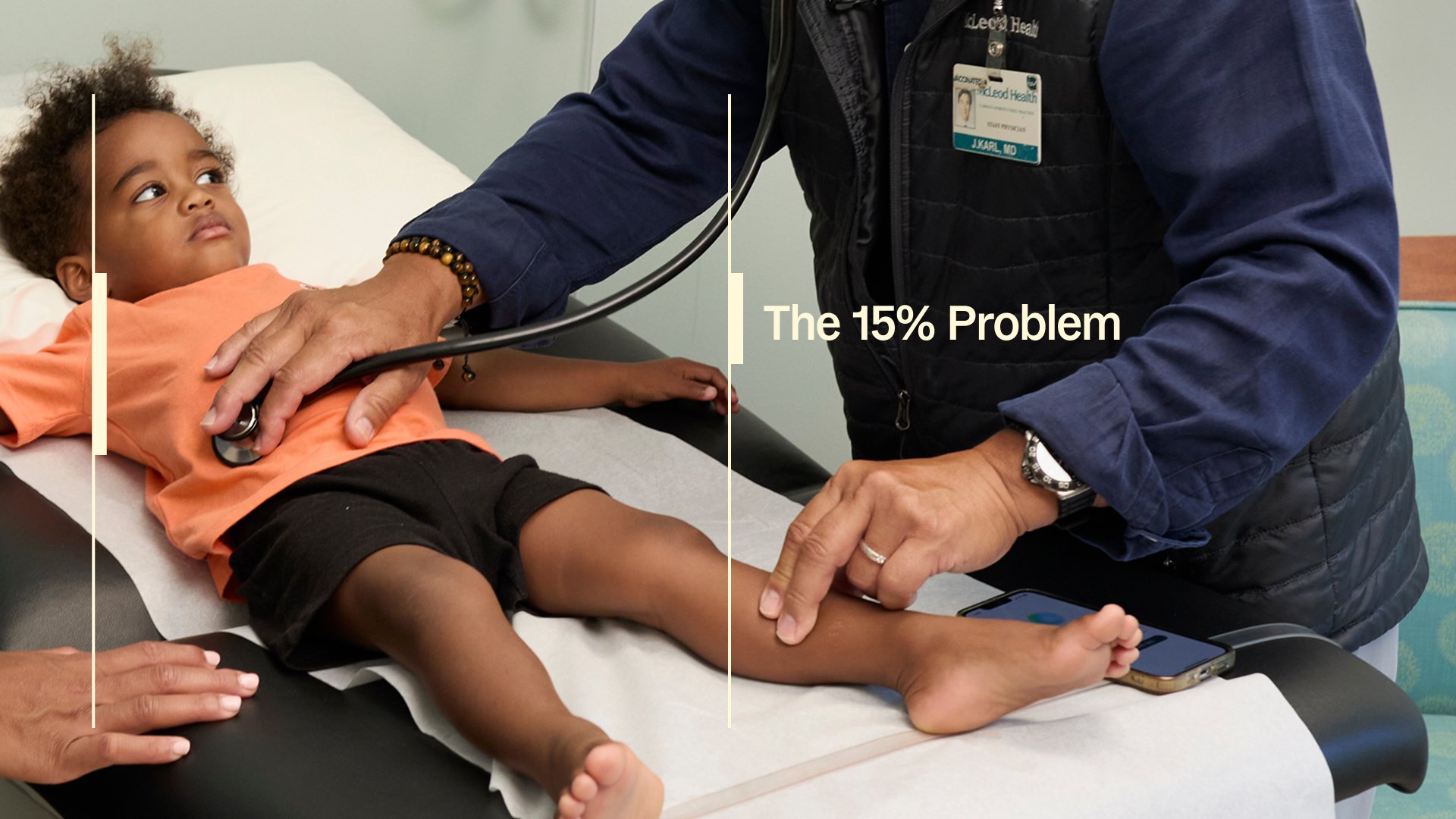
When AI Actually Pays Off: What Three Health Systems Found When They Let KLAS Do the Math
The ambient AI pitch in healthcare has always had a certain credibility problem. Vendors demo beautifully. Clinicians get excited. Then the ROI conversation starts, and everyone retreats to vague language about "reducing burnout" and "improving documentation workflows." Numbers get fuzzy. Timelines stretch. The business case never quite closes.
That's what makes the KLAS ROI Validations report on Suki worth a close read.
KLAS, the independent research firm whose scoring can make or break a healthcare IT vendor's sales cycle, put three large health systems under the microscope: FMOL Health, McLeod Health, and Rush University System for Health. All three run Epic. All three completed structured pilots before rolling out broadly. And all three agreed to let KLAS independently validate what actually happened, not what they hoped would happen, but what the data showed.
The big takeaway: Suki delivered measurable ROI within months, and every organization expanded beyond its pilot. Not because a vendor pushed them to, but because the value showed up fast enough to justify it.
The Documentation Tax Is Costing More Than Anyone Wants to Admit
Before getting to the numbers, it's worth acknowledging why this category exists in the first place.
Physicians in ambulatory care routinely spend two or more hours per day on documentation after clinical hours end. Notes accumulate. Chart closure lags. Cognitive load bleeds into the next day's patient care. The administrative burden has become so normalized that many organizations have stopped counting the cost; they've just learned to manage around it.
Ambient AI changes the workflow assumption: instead of clinicians narrating or typing after a visit, the AI listens during the encounter, drafts the note, and pushes it directly into the EHR. No copy-pasting. No toggling between systems. In a best-case scenario, the note is done by the time the clinician walks out of the room.
What KLAS measured is whether that best case is actually what's happening at scale — and by how much.
The Time Numbers Are Real, and They're Not Small
Across all three organizations, clinicians got meaningful time back. FMOL Health saw a 21% reduction in time spent on notes and a 65% drop in after-hours note completion. McLeod Health tracked a 26.8% reduction — translating to 3.6 hours of provider time recovered per month per clinician in the pilot — with 35.4% less time spent on after-hours documentation. Rush University clocked a 4% reduction in both total note time and after-hours work, modest by comparison but meaningful at an institution that had already deployed a competing ambient solution with human scribes.
Perhaps the starkest signal: at FMOL Health, 43% fewer notes were left open for more than seven days after Suki deployment. That's not an efficiency metric; it's a quality and compliance metric, and it moves downstream into billing, audit readiness, and physician satisfaction in ways that compound over time.
These gains weren't cherry-picked from the highest performers. The measurement methodology required consistent usage thresholds (over 20% utilization), minimum encounter volumes, and at least three months of baseline data before counting any results. KLAS wasn't measuring the enthusiasts; it was measuring the population.
The Revenue Story Is Cleaner Than Expected
Here's where the report gets genuinely interesting for CFOs and revenue cycle leaders.
All three organizations saw improvements in E/M coding accuracy after deploying Suki. When documentation is more complete, capturing multiple problem statements, reflecting the complexity of the encounter, the resulting notes support higher-acuity billing codes. The AI doesn't upcode; it simply ensures the documentation reflects what actually happened during the encounter
The financial impact of that shift varies by organization, but is consistent in direction:
- FMOL Health: $862 incremental revenue per user per month, driven by a 6.5% increase in established Level 4 patient visits
- McLeod Health: $1,004 net gain per provider per month from E/M coding shifts, and $2,629 in total revenue improvement per provider per month.
- Rush University: $178 per user per month, smaller in magnitude but validated against a more conservative baseline
What's striking about these numbers is how they were generated. None of the organizations pressured clinicians to see more patients. FMOL Health's leadership was explicit about this: the goal was burnout reduction, not productivity quotas. The revenue improvement at FMOL came partly from an organic 22% increase in patient volume, meaning that clinicians who had more capacity chose on their own to see more patients.
That distinction matters. ROI built on forcing throughput is fragile and tends to erode clinician trust. ROI built on reducing friction tends to compound.
The Operational and Patient Signals Are Early but Consistent
The more ambitious claims in ambient AI (that it improves patient satisfaction, enhances the quality of the clinical encounter, and deepens the patient-provider relationship) are harder to measure. KLAS was appropriately careful here, classifying several of these outcomes as qualitative rather than quantitative.
But the early data is directionally strong. McLeod Health used NRC Health survey data in a matched-pair design to measure patient experience before and after the pilot: provider listening and trust scores increased by 6.3%. Patients who filled out post-visit surveys after their clinician started using Suki produced an NPS of 65, a score that would be the envy of most consumer brands, let alone healthcare providers.
The mechanism is intuitive once you see it in the data. When clinicians are less occupied with real-time documentation, they make more eye contact. They ask follow-up questions. The visit feels less transactional. McLeod Health's CMIO personally rounded with clinicians during rollout, modeling the behavior himself. That kind of executive engagement tends to show up in outcomes, and it did here.
McLeod also achieved an 81% adoption rate among 249 providers since its system-wide rollout, generating over 150,000 notes. Adoption numbers like that don't happen by mandate; they happen when clinicians tell their colleagues that the tool actually works.
What the Pilots Got Right (and What Others Can Replicate)
One of the most useful sections of the KLAS report isn't the outcome data — it's the lessons-learned synthesis across all three organizations. A few themes stand out:
Champions over mandates. All three organizations leaned heavily on voluntary early adopters and physician champions to drive adoption. McLeod specifically recruited champions from among former skeptics, which proved more persuasive than selecting the already-enthusiastic.
Governance before deployment. Getting revenue cycle, clinical informatics, IT, and executive leadership aligned before go-live prevented downstream billing and documentation quality issues that could have eroded trust in the system.
Pricing structure as enabler. McLeod negotiated a utilization-based pricing model, paying per encounter with a cap, which removed the financial risk of broad deployment. That alignment between cost structure and adoption incentives turns out to matter quite a bit.
Longitudinal measurement. The organizations that got the cleanest results used at least three months of pre-implementation baseline data and measured outcomes across a wide enough window to account for the onboarding learning curve. Point-in-time measurements of ambient AI tend to understate value.
Why the Independence of This Validation Matters
It would be easy to look at this report and read it as a vendor-funded success report. It isn't. KLAS conducted independent in-depth interviews with key stakeholders at each organization, applied consistent measurement methodology across all three, and explicitly noted where outcomes were qualitative rather than quantitative. The report also notes that Suki specifically requested inclusion of certain metrics — improved E/M coding, increased patient encounter volume, improved patient satisfaction — and KLAS called that out transparently. That kind of disclosure is what separates real validation from a case study.
The underlying story here isn't really about Suki. It's about the broader question that every health system CMIO and CFO is now sitting with: when ambient AI actually works, how big is the impact, and how quickly does it show up?
The KLAS data suggests the answer is: faster than most organizations expect, across more dimensions than clinician time alone, and with enough consistency across very different organizations and deployment approaches to suggest the results aren't anomalous.
That's a more meaningful finding than any vendor pitch deck could deliver.
KLAS Research published the full ROI Validations report in January 2026. It includes detailed methodology, organization-specific breakdowns, and measurement frameworks for each outcome category. Follow the link to download the full report