Preparing nurses for an AI-enabled future: Why education should start before the bedside
September 14, 2026
Nursing has always been deeply human work. No technology can replace the clinical judgment, advocacy, empathy, and presence nurses bring to patient care. The arrival of healthcare AI doesn't change that. But it is changing the tools nurses use to do their jobs, and quickly.
AI is already becoming part of everyday nursing practice. Seventy percent of nurses now use AI at least once a week professionally, up from 46% just a year ago, according to Wolters Kluwer's 2026 Future Ready Healthcare survey. Yet adoption doesn't necessarily mean trust. McKinsey's 2026 survey of frontline nurses found that trust in the accuracy of AI outputs is now the most frequently cited concern about using AI in healthcare. More than half of nurses surveyed said evidence that AI improves quality and patient safety would help alleviate their concerns.
That gap between adoption and trust raises an important question for the nursing workforce: If AI is becoming one of the tools nurses regularly use in clinical practice, why should learning how to use it responsibly begin only after they arrive at the bedside?
It doesn't have to.
Nursing education has an opportunity to prepare students not simply to use AI, but to understand how to work with it: how to communicate effectively with AI-enabled tools, evaluate their outputs, recognize their limitations, and know when clinical judgment must take the lead. And simulation, where nurses already learn to translate knowledge into clinical practice, may be one of the most natural places to start.
“Caring out loud” is an emerging nursing skill
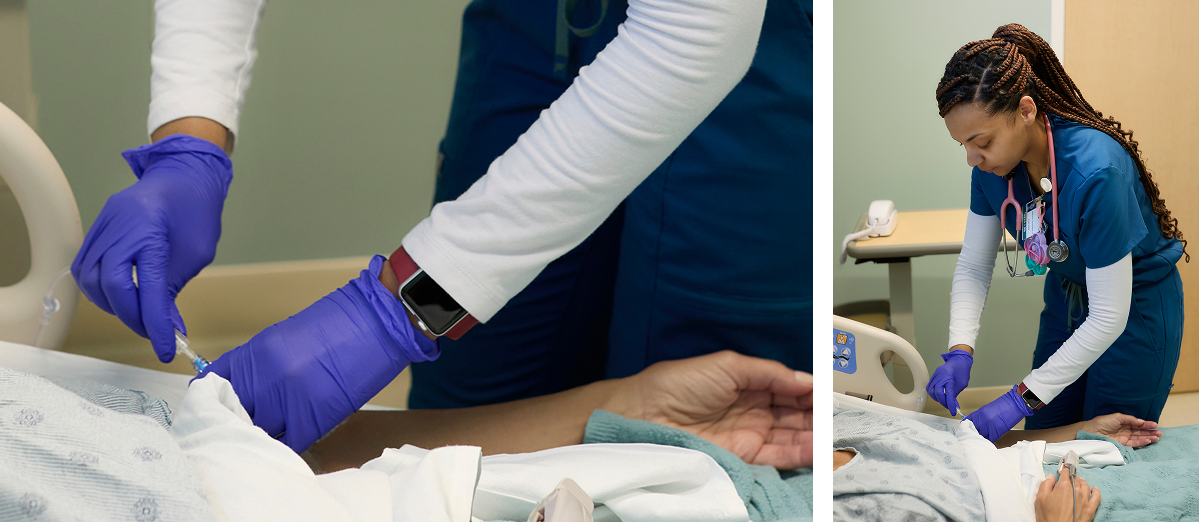
Nurses have always gathered an extraordinary amount of information at the bedside. During an assessment, a nurse may observe a patient's appearance, listen to breath sounds, assess neurological status, evaluate mobility, ask questions, interpret responses, and determine what requires further attention. Much of that observation and synthesis happens silently.
Ambient AI introduces a new dynamic. To get the most from the technology, nurses need to become comfortable naturally verbalizing relevant findings as they provide care, a behavior we think of as “caring out loud.”
For experienced nurses, that can mean adapting established habits. Nursing students have a different opportunity: they can develop the behavior alongside the clinical skill itself. As students learn to perform a head-to-toe assessment, they can practice articulating what they see, hear, assess, and observe.
Instead of learning the clinical workflow first and adapting to ambient technology later, the skills can develop together
Simulation is a natural place to start
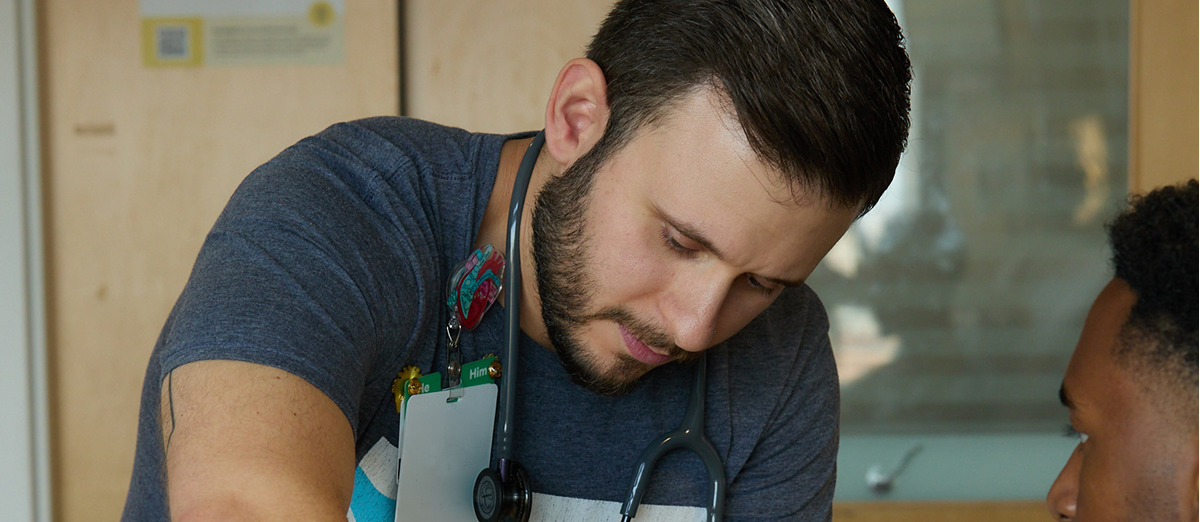
Simulation labs already give nursing students a safe environment to practice clinical skills, receive feedback, and build confidence before caring for patients independently. They can also provide a natural environment for learning how to use AI as a clinical tool.
Suki is partnering with nursing educators to introduce ambient AI into simulation. For example, at the Villanova University M. Louise Fitzpatrick College of Nursing, students can use Suki as they practice assessments and other clinical workflows, seeing how what they verbalize is translated into structured clinical documentation.
Suki's Ambient Clinical Intelligence goes beyond transcription, capturing the patient conversation to generate structured clinical documentation. In an educational environment, students can see how what they communicate is translated into documentation, evaluate the output against their own assessment, and learn where human review and clinical judgment remain essential.
The goal isn't unquestioning trust in AI. It's appropriate trust: understanding what the technology does well, recognizing its limitations, and retaining the clinical judgment to know when human intervention is needed.
Preparing nurses to work with AI isn't about replacing nursing judgment with technology. It's about giving nurses the understanding and experience to use technology on their terms, while preserving the judgment and accountability that remain fundamentally human.
Connecting care, communication, and documentation
AI readiness also intersects with a challenge that predates generative AI: preparing students for the digital documentation environments they'll encounter after graduation. Research suggests new graduates can struggle to develop EHR competency before entering practice. Hands-on experience plays an important role in building those skills, but realistic EHR training environments can be costly and complex for nursing programs to maintain.
That can leave a gap between learning how to perform an assessment and understanding how the information gathered at the bedside ultimately becomes structured clinical documentation.
At Suki, we believe access shouldn't be a barrier. That's why we have made our nursing education offering available at highly preferred pricing, giving schools another way to introduce students to AI-enabled, structured documentation within simulation experiences they're already running.
Students begin connecting three things fundamental to nursing practice: What I assess. What I communicate. What gets documented.
We're also beginning to explore broader questions with nursing educators. Could verbalizing an assessment help students work through their clinical reasoning more deliberately? Could seeing their assessment translated into structured documentation help them identify gaps in what they assessed or communicated? Could earlier exposure to these technologies better prepare graduates for clinical practice?
Those are questions we're studying, not outcomes we're assuming. But early enthusiasm from the educators and students we're working with has been encouraging.
Building a bridge from nursing school to bedside
As nursing students make the transition from school to the bedside, Suki is building support at both ends of the bridge. We're engineering ambient AI workflows for nurses practicing at the bedside today, designed to reduce documentation burden and allow technology to fit more naturally into nursing care. At the same time, we're partnering with nursing schools to introduce future nurses to these emerging workflows before they enter practice.
This creates an opportunity for health systems, too. Many CNOs and CNIOs already have strong relationships with affiliated nursing schools and the programs supplying their future workforce. As health systems develop their AI strategies, nursing leaders can bring those academic partners into the conversation.
Start with a simple question: How are we preparing nursing students for the technology they'll encounter when they arrive at our bedside?
Health systems can share how workflows are evolving, encourage academic partners to incorporate emerging technology into simulation, and help future nurses gain exposure before orientation begins. For nursing schools, that preparation can also become a point of differentiation. In a competitive environment for both students and future nurses, schools have an opportunity to demonstrate that they're preparing graduates not only for how nursing is practiced today, but for how it is evolving.
Imagine the continuum: nursing school simulation → new-graduate orientation → bedside practice. Technology readiness doesn't have to begin at the third step.
The goal isn't to train students on one platform. Technology will continue to change. The opportunity is to build durable capabilities: nurses who are comfortable caring out loud, evaluating AI-generated information, navigating structured clinical documentation, and knowing when technology can help and when nursing judgment must lead.
AI adoption is already happening. Building the knowledge, experience, and judgment required to use it responsibly shouldn't have to catch up later.
For nursing leaders thinking deeply about recruitment, retention, readiness, and the future of their workforce, AI shouldn't simply become one more competency to teach after hire.
We can start preparing nurses before they ever arrive at the bedside.
Ready to prepare your nursing students for the next generation of healthcare technology? Reach out to us and see how Suki can fit into your institution’s nursing curriculum today.