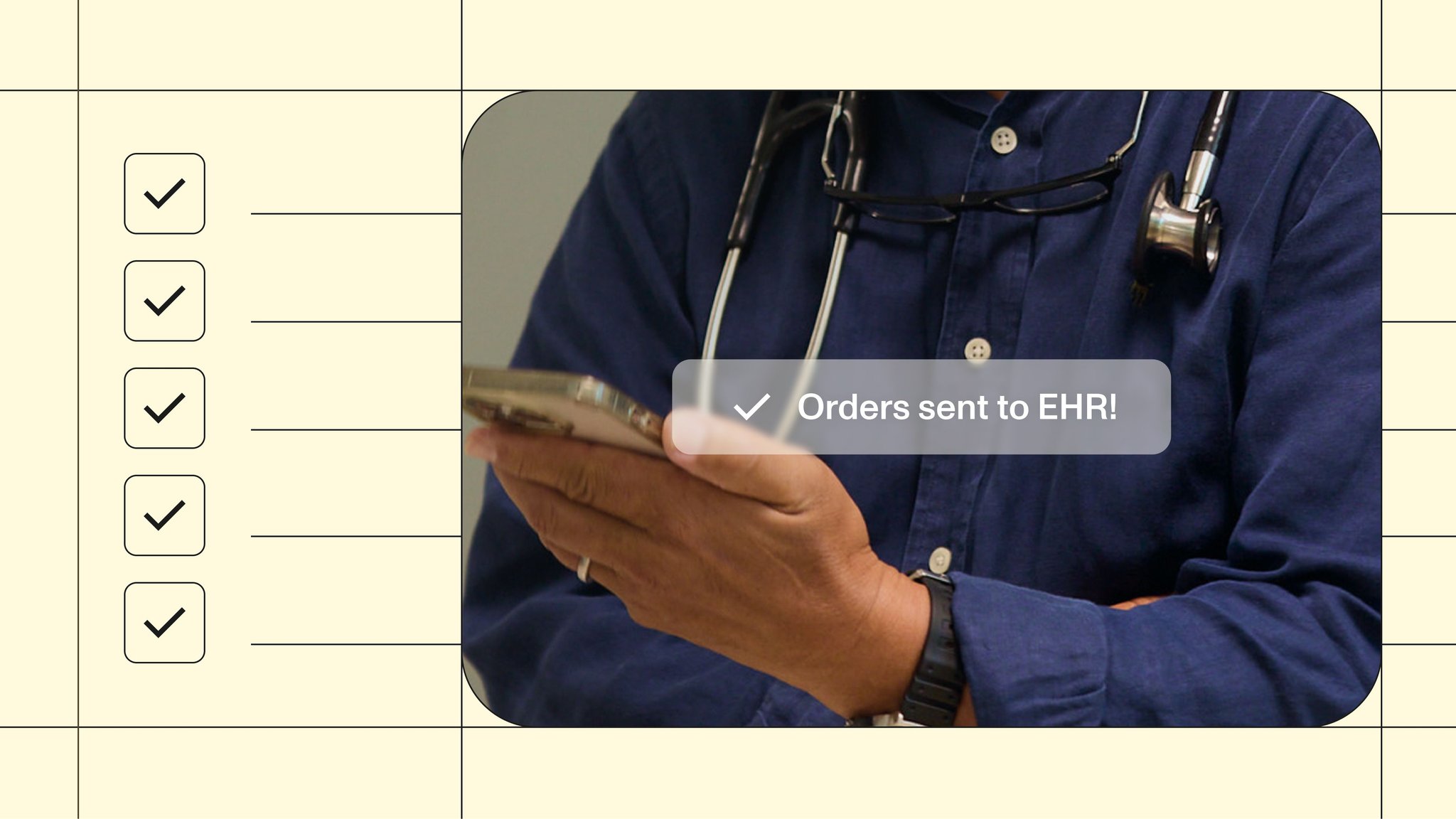
Inside AI medical scribes: How they work, and how clinicians benefit
AI medical scribes promise a breakthrough solution to a decades-old problem: the administrative burden of clinical documentation.
A 2024 study published in the Annals of Family Medicine found that for every 8 hours of patient visits, primary care physicians spent 5.3 additional hours in their EHRs, with 2.1 of those hours devoted specifically to clinical documentation. The note becomes a second shift. It spills into evenings and weekends, a stretch many clinicians call "pajama time."
This article explores how AI medical scribes work, and how they can help clinicians save time on documentation and focus more on what matters most.
What Is an AI Medical Scribe?
An AI medical scribe is software that listens to a patient visit and drafts the clinical note. Think of it as an assistant that never leaves the exam room.
AI medical scribes leverage technology known as ambient listening, which captures voice and other cues in an environment, then acts on what it hears. Ambient listening is context-aware technology that works passively, without the clinician having to use a wake word or command. The scribe drafts notes during the patient visit. It captures the conversation, organizes the clinical details, and syncs the draft to the electronic health record (EHR). The clinician then reviews and signs off.
That last step is the point. An AI medical scribe starts the documentation process, but it’s not final until a clinician reviews everything. A scribe cannot replace medical judgement.
AI Scribe vs. Ambient Clinical Intelligence: A Quick Distinction
You will often hear the terms AI Scribe and Ambient Clinical Intelligence used interchangeably. They are related, but they are not the same thing.
- AI scribe: Handles documentation only. It turns the visit into a draft note and is one capability.
- Ambient clinical intelligence (ACI): Covers documentation plus the broader clinical workflow. That includes orders, coding, and decision support, making it the larger platform.
The takeaway is simple. The scribe is one piece of the larger ACI picture.
How Does an AI Medical Scribe Actually Work?
At a high level, three technologies work together. Speech recognition converts talk into text. Natural language processing (NLP) finds the clinical meaning. Machine learning shapes it into a structured note.
All of this runs quietly in the background while the visit unfolds. Here is the workflow, step by step.
1. Capture
Microphones record the conversation between clinician and patient. That might be a smartphone, a laptop, or a room device.
Clinicians typically ask for the patient's consent first. Good programs make that step routine and transparent.
2. Separate
The system then works out who said what. This is called speaker separation, or diarization.
It matters more than it sounds. "I have chest pain" means something very different from "Any chest pain?"
3. Interpret
NLP reads the transcript and extracts the clinical detail. That includes symptoms, medications, diagnoses, and plans.
It also filters out small talk, so the weather chat never reaches the chart.
4. Draft
Generative models assemble the findings into a structured note. The format follows the clinician's needs, such as a SOAP note or a specialty template.
The result reads like a note a clinician would write. It simply arrives faster.
5. Sync
The draft flows into the EHR, ready for the clinician to open. Strong EHR integrations keep this step seamless, with no copy and paste.
6. Review
The clinician reads the draft, edits what needs changing, and signs off. Nothing becomes part of the record without that approval.
Human review is not a formality. It is how accuracy and accountability stay with the care team.
The AI Medical Scribe workflow at a glance
- Capture: Microphones record the visit, using audio capture technology.
- Separate: Speakers are identified through speaker diarization.
- Interpret: Clinical details are extracted using NLP.
- Draft: A structured note is generated by machine learning models.
- Sync: The note lands in the EHR through system integration.
- Review: The clinician edits and signs off, providing human oversight.
Benefits for Clinicians
The first payoff shows up on the clinician's calendar. Time is the scarcest resource in medicine, and documentation consumes plenty of it. Documentation is a leading cause of clinician burnout. AI medical scribes have been shown to help lift that burden. Three gains stand out:
- Less documentation time. Notes are drafted during the visit, so fewer are left for after hours.
- Lower cognitive load. Clinicians stop holding details in memory while waiting to type.
- More focus on care. Attention moves from the keyboard back to the patient.
The numbers are striking at scale. A Phyx Primary Care report from 2025 examining the impact of Suki for primary care physicians found 41% reduction in documentation time per note — from 13.8 minutes to 8.2 minutes.
After more than 30 days of using Suki, physicians also reported:
- 37% decrease in after-hours work — saving physicians approximately 48 minutes per day
- 32% fewer "rushed" visits
- 46% more notes completed before the next patient
In another example, The Permanente Medical Group used ambient AI scribes for a year across more than 2.5 million patient encounters. Physicians saved an estimated 15,791 hours of documentation time, according to AMA reporting. That equals 1,794 eight-hour workdays.
0
hours
of documentation time saved in one year
Smaller studies add useful nuance. A time-motion study in JMIR Medical Informatics observed nine clinicians with and without a multilingual ambient scribe. Experienced users spent less time on documentation. Consultations did not run longer. Results will still vary by user and workflow, which is why training and rollout matter.
Curious how this looks in practice? Explore Suki for clinicians.
Improving the Patient Experience
For patients, the benefit is easy to feel. The person across from them looks up.
When the clinician stays present, three things tend to change:
- More eye contact, less screen time. The exam room feels like a conversation again.
- Less rushed, less fragmented visits. Questions get asked and answered without pauses for typing.
- Stronger trust and engagement. Patients open up when they feel heard.
The JMIR study points the same way. Researchers found improved patient engagement without any change in consultation length. Same visit length. More of the clinician's attention.
There is also a quiet advantage for patients who speak more than one language. The studied tool handled English, Mandarin, and Malay in real consultations.
More Than a Scribe
AI scribes lift the documentation burden and restore presence in the exam room. For clinicians, that means time back. For patients, it means a more attentive visit.
But a scribe is a starting point, not a destination. Suki goes much further.
Suki is the intelligent infrastructure powering the future of clinical AI. Our Ambient Clinical Intelligence is engineered to transform your workflow, supporting documentation, coding, and revenue cycle management. Manage charting, dictation, patient instructions, orders, and more with a platform that integrates with the top EHRs and delivers real ROI. Explore Suki’s solutions and discover a comprehensive solution that’s putting an end to endless admin
Ready to see what Suki can do for your organization? Contact Us.