Science at Suki: Bringing scientific rigor to Ambient Clinical Intelligence
September 1, 2026
Health care systems in the US have enormous enthusiasm for Artificial Intelligence, deploying it at more than twice the rate compared to the rest of the economy. Healthcare AI spending tripled between 2024 and 2025 to $1.4 Billion, with health systems accounting for 75% of that expenditure. It famously takes an average of 17 years to change clinical practice, yet the adoption of AI in healthcare has defied history, skyrocketing from near-zero to nearly one-third of health systems in just two years.
However, the American public is not so sure. “Adoption is high, but confidence is fragile,” according to a new study by the Consortium for Health AI (CHAI), a collaboration of AI start-ups, health systems, payers, and policy makers, and the University of Chicago’s National Opinion Research Center, funded by the California Health Care Foundation. The survey found that while 75% of respondents reported using AI, only 13% feel very comfortable with it. In fact, 51% reported that AI made them trust healthcare less, and 93% reported at least one concern about AI in healthcare.
At Suki, there is tremendous scientific expertise underpinning this technology. For more than eight years, our product managers, engineers, scientists, and clinicians have been working together to create cutting-edge ambient AI technology to improve the lives of clinicians and patients. This includes understanding clinical needs, developing new technologies to address those needs, solving challenging technical problems, and studying the impact of our products.
Scaling Ambient Clinical Intelligence
As Ambient Clinical Intelligence rapidly scales, Suki is moving from product development to scientific leadership. Through this Science at Suki initiative, we are sharing our comprehensive efforts with the public in support of transparency, accountability, and trust.
“At a time of rapid AI adoption and fragile public trust, Science at Suki leverages our unique vantage point across the healthcare ecosystem to provide much-needed clarity,” says Suki CEO Punit Soni. “We are contributing to scientific leadership in the field of ambient AI by ensuring rigorous clinical and technical standards are applied throughout the entire process—from initial product development to deployment at scale. By answering the industry's toughest questions with evidence-based accountability, we ensure that as this technology scales, it remains safe, effective, and fundamentally grounded in science."
Inside the Science at Suki initiative
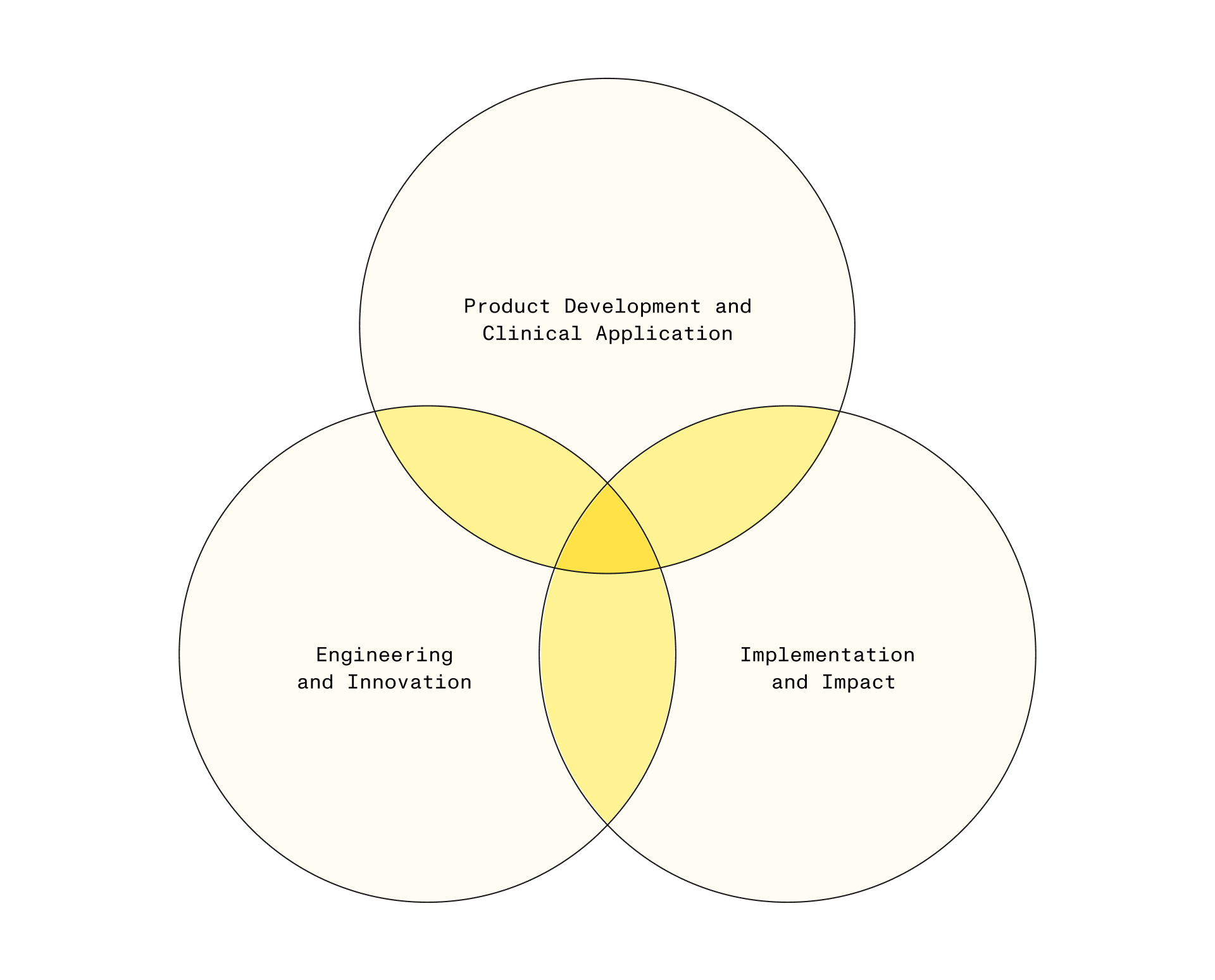
Our group of scientific experts will create articles, blogs, interviews, videos, white papers, and peer-reviewed publications covering a wide range of topics where Suki is contributing to the Science of Ambient Clinical Intelligence. We will cover innovations in the field of ambient AI from end to end across the entire path from ideation to implementation by covering three core areas: Product Development and Clinical Application, Engineering and Innovation, as well as Implementation and Impact. We will highlight the cutting-edge patents won by our innovative engineers, technical lessons from solving difficult AI/ML challenges, clinical insights as applied to product development, as well as the post-deployment effects of ambient AI on value drivers in healthcare, on adoption and engagement, and on medical education.
The Science at Suki initiative has three distinct but overlapping focus areas:
- Product Development and Clinical Application - The Clinical and Product teams understand the clinical needs and how to take technical capabilities and transform them into ambient clinical intelligence functionality. In this section, we will discuss the clinical challenges and needs that have to be met by this technology and how we think of quality, reproducibility and scalability.
- Engineering and Innovation - The Engineering and AI/ML teams at Suki are constantly innovating in the new field of ambient AI. Understanding and solving technical challenges and doing so at scale is essential to creating products that are useful to the healthcare community. In this section, we will highlight the novel technical progress we have to make to solve technical challenges and how we solve those challenges in a scalable manner.
- Implementation and Impact - While ambient AI shows immense promise, the industry faces urgent questions: How will this affect the patient-doctor relationship? What are the long-term consequences for medical education? How do we measure true ROI? The implementation and impact of this new technology to ensure that Ambient Clinical Intelligence is developed, tested and implemented in a safe, fair, and scientifically rigorous manner will be assessed through the new Suki Research Collaborative.
Meet the Science at Suki team
Narayanan Edakunni PhD serves as Senior Director of Machine Learning and AI at Suki, bringing over 20 years of AI research experience to his role. At Suki, he leads innovations around ML and AI workflows required to power various use cases in Suki. Nara is deeply engaged in building Suki's advanced capabilities across automatic speech recognition, natural language processing, data science and AI infrastructure. He is also a champion of Suki's intellectual property initiatives, having helped grow the company's patent portfolio in AI-driven clinical documentation and fosters a culture of innovation across Suki's engineering and ML teams.
Pranav Kumar Anshu serves as Senior Director of Engineering at Suki, where he leads the Backend, Data & ML Inference Engineering team with a focus on building scalable and reliable systems that power Suki's Ambient AI platform. He oversees engineering strategy and execution across key Clinical AI capabilities including Clinical Reasoning, Clinical Documentation, Automatic Speech Recognition and Revenue Cycle Management — spanning medical coding, Q&A capabilities, patient summaries, and so on. Pranav’s team has also led the development of various core platforms at Suki, which include the Data Platform, LLM Gateway and the Agent Platform. Pranav is passionate about designing robust systems, shaping engineering organizations, and tackling complex technical challenges — and equally passionate about sharing those learnings with the broader community.
Katherine Prevas MS,PA-C MBA is a Medical Director at Suki and is a practicing Emergency Medicine Physician Assistant with 15 years experience within both clinical leadership and operations. As a previous Chief Operating Officer and Dir. of Clinical Innovation, Katie has spent many years combating clinical inefficiencies and has led large scale SAAS evaluations and implementations across enterprise health care networks. Katie holds a Masters Degree in Medicine from Towson University and a Masters in Business Administration from Loyola University, Maryland.
Sudha Jayaraman MD MSc FACS serves as the Medical Director for Clinical Strategy and Research at Suki. She is a practicing double-boarded surgeon and critical care physician with more than 15 years of experience in clinical care, health systems research, device and health tech as well as global health. She came to Suki to lead research into the implementation of ambient AI technologies from the University of Utah where she was a full Professor for 5 years and held the Clifford C. Snyder, MD Far Eastern Presidential Endowed Chair for health innovation. She has authored more than 110 scientific publications and book chapters and has been funded by the National Institutes for Health for the last decade. She also contributes to the World Health Organization’s standards on emergency medical services. Dr Jayaraman leads the Suki Research Collaborative which partners with a variety of organizations to study the impact of implementing Suki’s ambient AI capabilities.
Looking ahead
As a leader in the Ambient Clinical Intelligence space, Suki is committed to contributing to the growing body of research on ambient AI and identifying new opportunities to apply this technology responsibly and effectively in the healthcare space. Science at Suki will enable our Suki engineers, clinicians, and other scientific experts to explore novel applications, methodologies, and outcomes related to ambient and agentic AI in healthcare delivery with scientific rigor, transparency, and mutual benefit to all participants.