A distinguished career in medicine: Four decades of caring for others
June 22, 2026
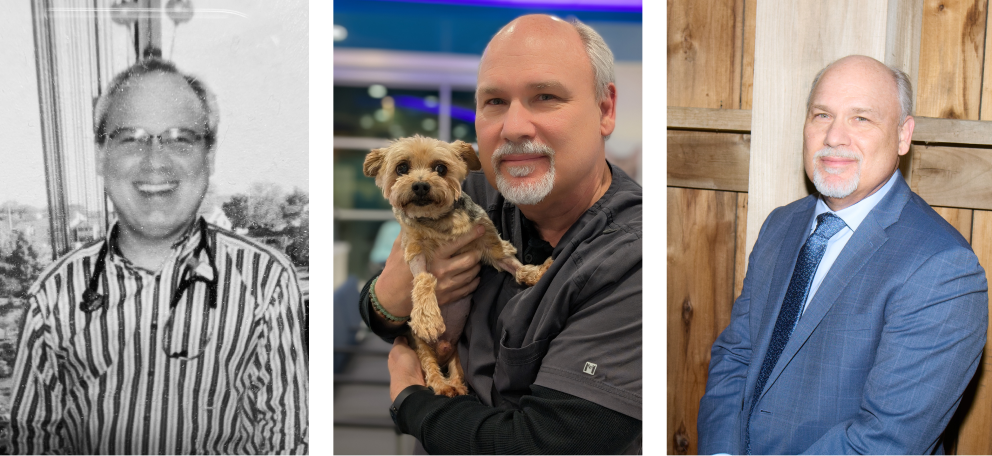
Dr. Michael Miller started as a doctor in 1991. For nearly 40 years, he cared for patients, supported his colleagues, mentored new doctors, volunteered in his community, and, over the last nine years, partnered with Suki to help us shape the future of healthcare. Shortly after his retirement, Dr. Miller sat down with us to reflect on his distinguished career.
If Dr. Miller's career had a common theme, it was helping people — from his patients (many of whom he now counts as friends) to doctors who were new to the practice to our founder Punit Soni, who he worked with to build the early versions of Suki.
When asked to sum up what his career meant to him, Dr. Miller said, “If you want to be happy, think about others. If you want to be unhappy, think about yourself. This was a career where I got to think about other people and get out of myself, and that's where happiness lies.”
From Early Inspiration to a Career of Service
Dr. Miller was drawn to science from his early years in school, and he started thinking about a career in medicine at a young age. “I did a science project in third grade where I used a plastic bag and made a stomach, and I put some Alka-Seltzer in there and made a little graphic model. My teachers were impressed. And when I was researching it, I thought it was fascinating. And I thought I could be happy studying the human body because it's just so amazing.”
Years later, Dr. Miller attended medical school at Kansas City University of Medicine and Biosciences, in the College of Osteopathic Medicine. From there, he started working in the emergency room in Nashville, spending seven years there before he found his way to what he'd trained for: family practice. “I realized it was a way to be of service. You know, primary care is a difficult field. We're the least paid, but we're the most needed. And so you have to be committed if you want to do it, because you're not doing it for the money. And I'm glad to be in a group of people who I really think truly care.”
Life in the Office with Dr. Miller
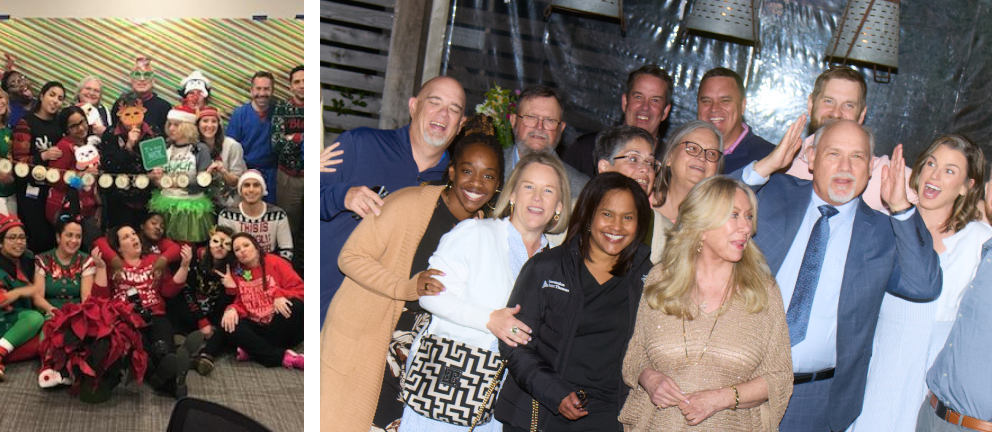
You can learn a lot about a person from the people who worked alongside them for decades.
Penny Wells worked alongside Dr. Miller for 20 years. She went back to school later in life and became a registered medical assistant. Dr. Miller hired Ms. Wells right out of school, and they’ve been a team ever since. When she talks about what it meant to work with him, her emotion is immediate.
"Coming to work has never been a drudge for me. I always enjoyed every morning getting up and knowing it was going to be a good day working together."
She describes the way he practiced with patients: "A lot of doctors nowadays don't even take their hand off the doorknob. You know, they're on the computer, or they're this or that. But Dr. Miller just really takes his time."
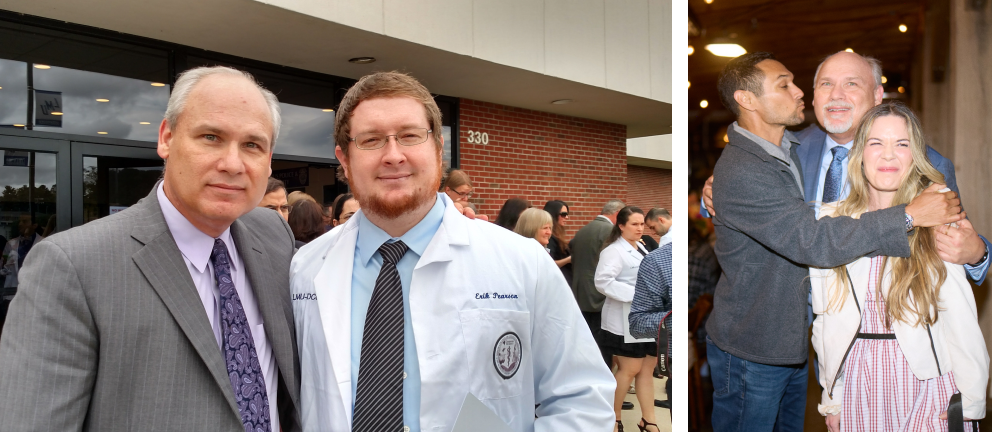
Presence is a common theme that Dr. Miller’s friends, colleagues, and patients mention when talking about the impression he made on people and the legacy he leaves behind. He’s known for giving his time, attention, and care to those who need it. Dr. Rachel Mehr, a family medicine physician, met Dr. Miller when she was a resident rotating through the ER. They worked many a long night together in the emergency department. And one day, he asked her what she was doing after residency.
"And he recruited me to come work with him," she says. "Dr. Miller has been my friend for so long, and he made working at Ascension amazing because he was just so easygoing and supportive. In the early years of my career, I could ask him any question, and he always took the time to help me and give a thoughtful answer."
Dr. Mehr says Dr. Miller helped build her confidence as a young physician, the way a good mentor does — not by removing difficulty, but by making it safe to ask. "He raised me as a doctor," she says. "I feel like, because of him, I'm also very open and approachable and friendly with my patients, as well as my colleagues.
Presence as a Practice
If there's a thread that runs through everything Dr. Miller says about medicine, it's the word “presence.”
He tells a story he's probably told before, but it lands every time: imagine the most important court case of your life. The judge comes in, sits at the bench. Then gets up, walks to the court stenographer's desk, and says, "Don't worry, I can do both of these at the same time."
"How would you feel?" he asks. "And we're dealing with people's lives, doing the same thing. We're dealing with their health, and we're saying, ‘Oh, we can do both of these.’ And you can't."
When the distraction of documentation is taken away, Dr. Miller says clinicians are left with just one true focus: “How can I take care of this patient in front of me the best? And that's where I think, for me, I was so drawn to Suki, is that this is a way that takes those other things out of the way. All of the coding, all of the documentation for specifics, all of the ICD codes, all of that stuff is taken away, and I can just focus on what's wrong, and how can I help.”
Presence, for him, extends beyond the exam room. Spiritual pursuits, he says, are what finally made him embrace retirement. Present-moment awareness. The idea that if you can be truly here, in this moment, with this person, something essential happens — for them and for you.
"We are spirits having a physical experience," he says, "not physical beings having a spiritual experience."
By the end of his career, his understanding of what ailed his patients had shifted: "I would say 60 to 70% is spiritual. It's manifesting in physical form." Whether or not you share that mindset, there's something in it worth sitting with — the idea that what a patient most needs from their doctor is not just competence but full attention. Contact, even.
Beyond his clinical work, Dr. Miller also became involved with the Tennessee Medical Foundation, which oversees impaired physicians, and eventually served as its president. He believed osteopathic medicine was underserved in the South, so he helped form the region’s first osteopathic medical school and became president of the Tennessee Osteopathic Medical Association, serving as director of quality and clinical effectiveness for his health system.
None of this was required. None of it came with extra pay. It was just Dr. Miller being fully present with the people and communities he wanted to help.
The Legacy
Experts say medical knowledge doubles every 73 days. Healthcare evolves as new treatments and groundbreaking advancements revolutionize the field — and the same goes for the technology that underpins the system itself. The way medicine is documented has also changed dramatically over Dr. Miller’s career, and he didn’t just embrace the change; he helped make it happen.
Dr. Mehr lights up talking about it: "He's a trailblazer. He set things up to be better for all of us. He improved a lot of the ways we work in our office; those things are the way they are because he helped to build it that way."
Ascension COO Beth Van Gilder describes her nine years working with Dr. Miller, saying, "This is a person who has this great sense of humor but takes what he does very seriously. And his passion shows. He's just this incredible human connector."
His stepson Michael says it simply: "He always puts everybody else first."
Looking back over 40+ years and thousands of patients, Dr. Miller reflected on what it all adds up to, saying, “I think the biggest lesson, and not only in medicine, but life in general, is the interconnectedness, that we're all one. What I do for you, I do for me. And what I do to you, I do to me. And so when I help to heal you, I heal me. So I think that's what I learned.”
Medicine is in crisis. The statistics aren’t hard to find. The burnout rates, the early retirements, the physicians who leave not because they stopped caring but because the system made caring feel impossible. We tell that story a lot. It's true, and it needs to be told.
But there’s another story. The one where a clinician finds a way to stay present, with patients, with colleagues, with the people building the tools that might make healthcare better. The one where a doctor gives his honest feedback and stays engaged even when it would’ve been easier not to. The one where a career spent in service of others turns out, in the end, to have been a life fully lived.
Dr. Michael Miller's career is that story.
And within the architecture of a tool that thousands of physicians use every day, his voice is still there. The feedback he gave, the roadmap he helped shape, and the insistence that it could be better. Dr. Miller is part of Suki forever.
He didn't just survive modern medicine. He helped improve it.