Extending a career: A clinician reflects on 40 years and one game-changing technology
Charting on nights and weekends. The mental strain of endless documentation. It’s enough to make anyone want to retire. Especially after nearly four decades on the job.
Since Electronic Health Records (EHRs) became mainstream in the 2010s, clinicians (or at least those not using Ambient Clinical Intelligence) have been spending an average of 1-2 hours per day on after-hours charting, also known as “pajama time,” with primary care and subspecialty physicians carrying the heaviest burdens.
Dr. Michael Miller is candid about the toll. "It hit me. I lost my wife four years ago, and you can't get that time back,” he says. “I think of how many times we would be together, and I'm staring at a computer. We would watch Cheers because you don't have to think about it. And I could work on my charts, and at least we were doing something together. And that's sad. It shouldn't be that way.”
“You can't get that time back.”
Michael Miller, DO
Retired Family Medicine doctor
A Harvard study says 27% of a clinician's time is spent with a patient. The other 73% is spent on everything else. What that math costs a person over 40 years — what it costs the families behind those physicians — is a reckoning the medical system has been slow to make.
Finding balance
Dr. Miller specialized in osteopathic medicine as a primary care physician. He explains the nuances of this holistic approach, saying, “The body can heal itself when it's put back into balance. And so the idea is to have the person spiritually, mentally, physically, mechanically, and anatomically in balance, and the body will do what it needs to. So that goes along with primary care and something I really believed in.”
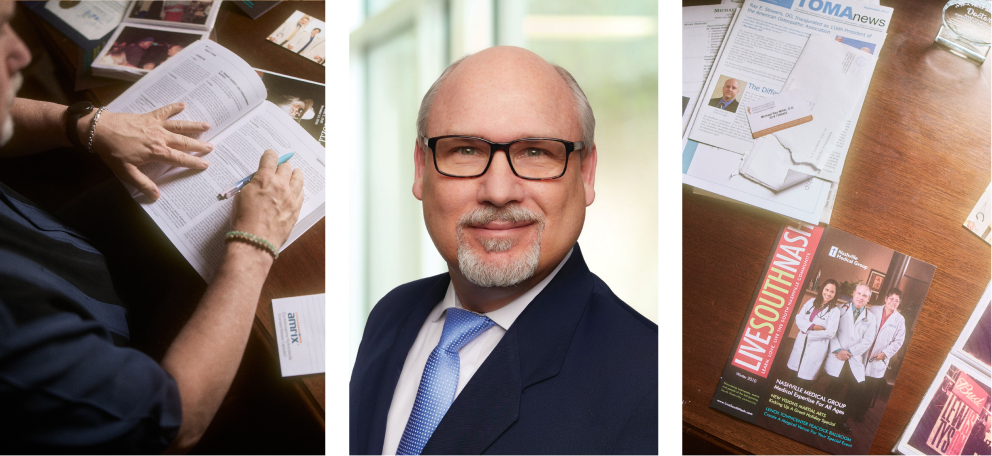
In the midst of trying to find that balance for his patients, Dr. Miller was losing his own work-life balance because of the heavy administrative burden of healthcare. Ask any clinician who came of age in the EHR era, and they'll tell you: there was a before, and there was an after. Dr. Miller was practicing in both, and he saw a lot change over the four decades of his career.
"When I first started in primary care, I had a paper chart,” Dr. Miller explains. “I would write what I felt like I needed to, and I would finish at the end of the day, and I would come home, and I would come in maybe 30 minutes early in the morning, and I had a life."
Then came ICD-10. Then came Electronic Medical Records (EMRs). Then came the documentation requirements that multiplied year after year. "What I think the system forgets," he says, "is really the only two pieces of the puzzle that are needed: the doctor and the patient. That's it.”
That conviction, that the doctor-patient relationship is the irreducible thing, would define how he practiced and why he stayed engaged long after many of his peers had grown cynical.
The family impact
Dr. Miller’s stepson Michael Esparza grew up watching medicine from the edges. The calls in the middle of the night. The family and friends who showed up at the house for after-hours medical advice or care. The parent whose job seemed to never really end.
"He always had to bring that home with him every night," Michael says of the notes and the documentation. "There was always work after work.”
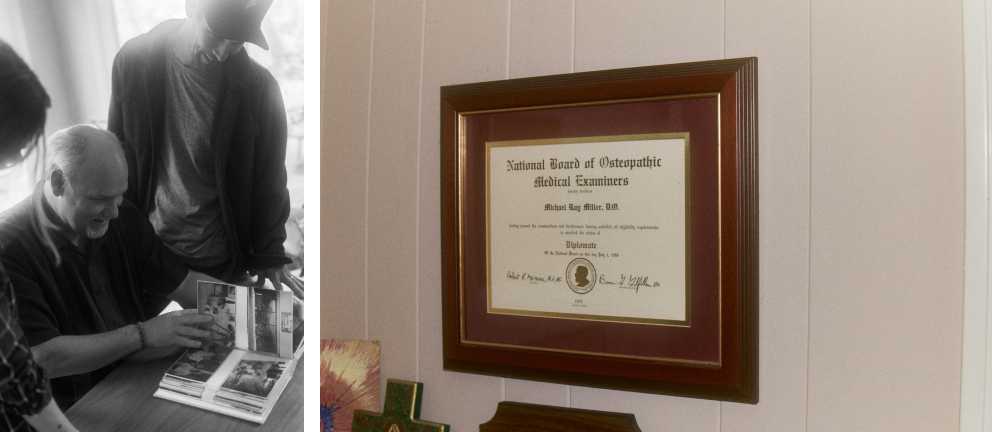
For Dr. Miller’s daughter Rachel O'Callahan, that workload left a lasting impact. Rachel says seeing her dad working on charts at home made her feel certain she didn’t want to become a family medicine doctor. “It made me think, ‘Oh, I don't want that. That’s not for me.’ I have so much respect for it, for the time and energy and love he put into this career. But it was a lot. He was working a lot at home.”
There’s a remarkable symmetry to this story.
Dr. Miller helped Suki build ambient AI for doctors, which helped extend his career when he was ready to retire. And now Suki is helping extend the careers of future doctors by lifting the administrative burden of medicine so they don’t leave the field because of burnout.
In Esparza’s words, that’s a best-case scenario. “There was frustration with him having to bring that work home. He would have loved to have been on the computer less and work on notes less. So it’s great if he can help with a solution for that. His life has always been about helping everybody, including the future doctors, the future practices, the family practices in town and around the country. And I think that combining forces with Suki has allowed him to help make progress in that.”
The broader story
The cost of burnout is massive. Every clinician who leaves their practice due to burnout costs their organization $500,000 to $1 million or more, depending on the specialty. Add it all up, and clinician burnout costs the U.S. health care system an estimated $4.6 billion a year.
Lost productivity, the cost of recruitment and hiring, and the ramp-up time to rebuild patient momentum are just some of the impacts that a health system feels when tenured clinicians burn out and leave the practice. Now, for the first time in decades, ambient AI is offering a solution.
“Reducing physician burnout is incredibly important to me,” says Beth Van Gilder, the COO at Ascension Saint Thomas, who worked alongside Dr. Miller for nearly a decade. “We’re seeing clinicians come in and not be just drained from the day-to-day grind. And actually, in a lot of cases, they’re excited to come in again, which they may not have felt for 10 or 15 years. It’s frankly a huge uplift.”
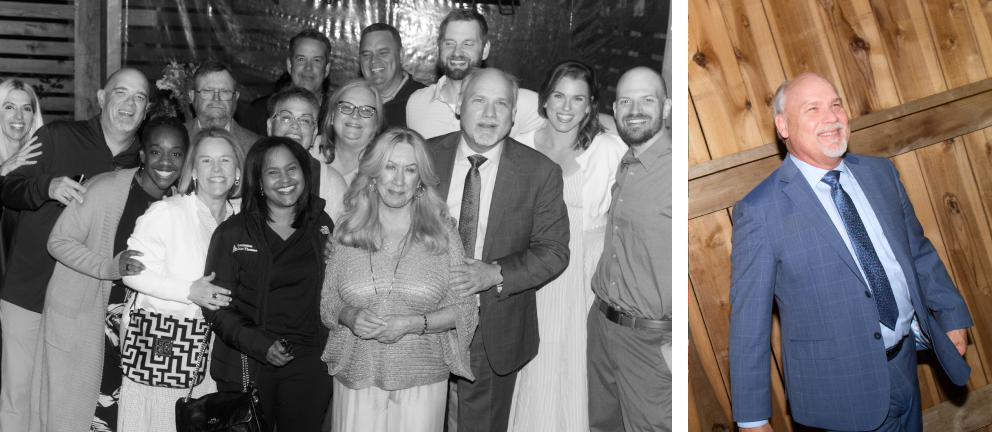
Dr. Miller says he didn’t work on Suki for himself or to help lift his personal administrative burden and save him time on notes. His main goal was always to help build the best tool for the next generation of doctors. “All the younger doctors, they never had the paper charts, they started right off with the EHR and everything that comes with it. So knowing that they have Suki and a chance of extending their careers — that was worth it for me.”
We’re incredibly proud of the impact Suki is making for clinicians every day. An independent ROI validation report found clinicians at leading health systems are getting meaningful time back thanks to Suki, including a 21% reduction in time spent on notes and a 65% drop in after-hours note completion. With numbers like that, Suki is much more than a burnout solution. Our Ambient Clinical Intelligence lifts the administrative burden so clinicians can stay in their careers for as long as they want to.
Dr. Miller’s parting words to the next generation of clinicians sum it up perfectly: “No one on their deathbed ever wished they had worked on more charts. Having a work-life balance is so critical, so use all the technology possible.”
Related Resources
September 24, 2026
Ambient Clinical Intelligence vs. AI Medical Scribe: What to Know
September 23, 2026
Why Ambient Clinical Intelligence is becoming core healthcare infrastructure — and who’s leading the shift
September 14, 2026