The invisible work of medicine and how AI can help
November 16, 2026
Have you ever wondered what your doctor does all day?
You see them for 15 minutes. You feel like there’s never enough time to talk about all the things on your mind. It takes months to get appointments. And yet you keep hearing that physicians are burning out and leaving medicine. Why is that? What’s happening?
What most patients don’t see is the extensive, invisible, draining, and scattered work it takes to deliver patient care. If you walk into a clinic at 4:40 on a Tuesday, the last patient of the afternoon has left, but the real workday is still going.
- Notes need to be finished and signed.
- Portal messages need an answer.
- A prior authorization form needs a clinical justification.
- A peer-to-peer insurance call is scheduled to fight for a patient to get the medication and procedure they need.
- A guideline update that was supposed to be read last month is somewhere in the stack.
Every one of these tasks is important, and none of them can wait. Doing any one of them means everything else slows down. The physician becomes the bottleneck without meaning to, when all they want to do is deliver high-quality care.
When you saw your doctor for 15 minutes, you probably left with a plan. Maybe it’s a lifestyle change suggested, a new medication ordered, or a specialist consultation needed. What you didn't see is the effort behind the scenes before or after the visit: what it takes to order additional tests or get a specialist consult, or the referral letter that has to include just the right history so the specialist can understand exactly what your doctor is worried about. And then there are the portal messages your doctor made sure to answer before the weekend, so you wouldn't spend two days worrying about what a lab result or a pathology report means.
Each of these is a legitimate part of good care. Together, they take hours to get done.
The invisible work
This work is invisible, and that’s part of the problem. It doesn't appear in a visit note or on a productivity dashboard, yet it fills evenings and weekends. Execution is where many good plans succeed or stall, and that means it can affect how quickly you get the test, the medication, or the referral you need.
Much of the friction comes from disconnected tools that were never designed to work together.
The work is draining because it’s scattered. The prior authorization is in one system, coverage rules are in another, the latest guidance is in a reference nobody has time to open, and the documentation requirements are in the note that’s already overdue. Every handoff is a small interruption, and the interruptions add up to a day in which the work of caring for patients competes with the work of moving paperwork for them.
Some of this friction protects patients and doctors from errors and gaps in care, and it shouldn't be removed carelessly. But much of it comes from disconnected tools that were never designed to work together. Physicians and medical staff have been left to serve as the integration layer between systems that don't talk to each other. That’s not a clinical skill, and it shouldn’t be the price of practicing medicine well.
The next chapter of healthcare AI
Artificial intelligence has the potential to address the burden of care coordination directly. Clinicians need an AI clinical assistant that handles busywork, so they have more time for patient care. Documentation tools have made real progress, and they deserve credit. But a faster note doesn't help if the authorization, referral, and inbox work stays the same. Prior authorization alone takes physicians and their staff an average of about 13 hours a week, according to a 2024 AMA survey. Shaving minutes off the note while those hours remain intact leaves the day largely unchanged. Clinicians need better tools that actually fit together to deliver patient care.
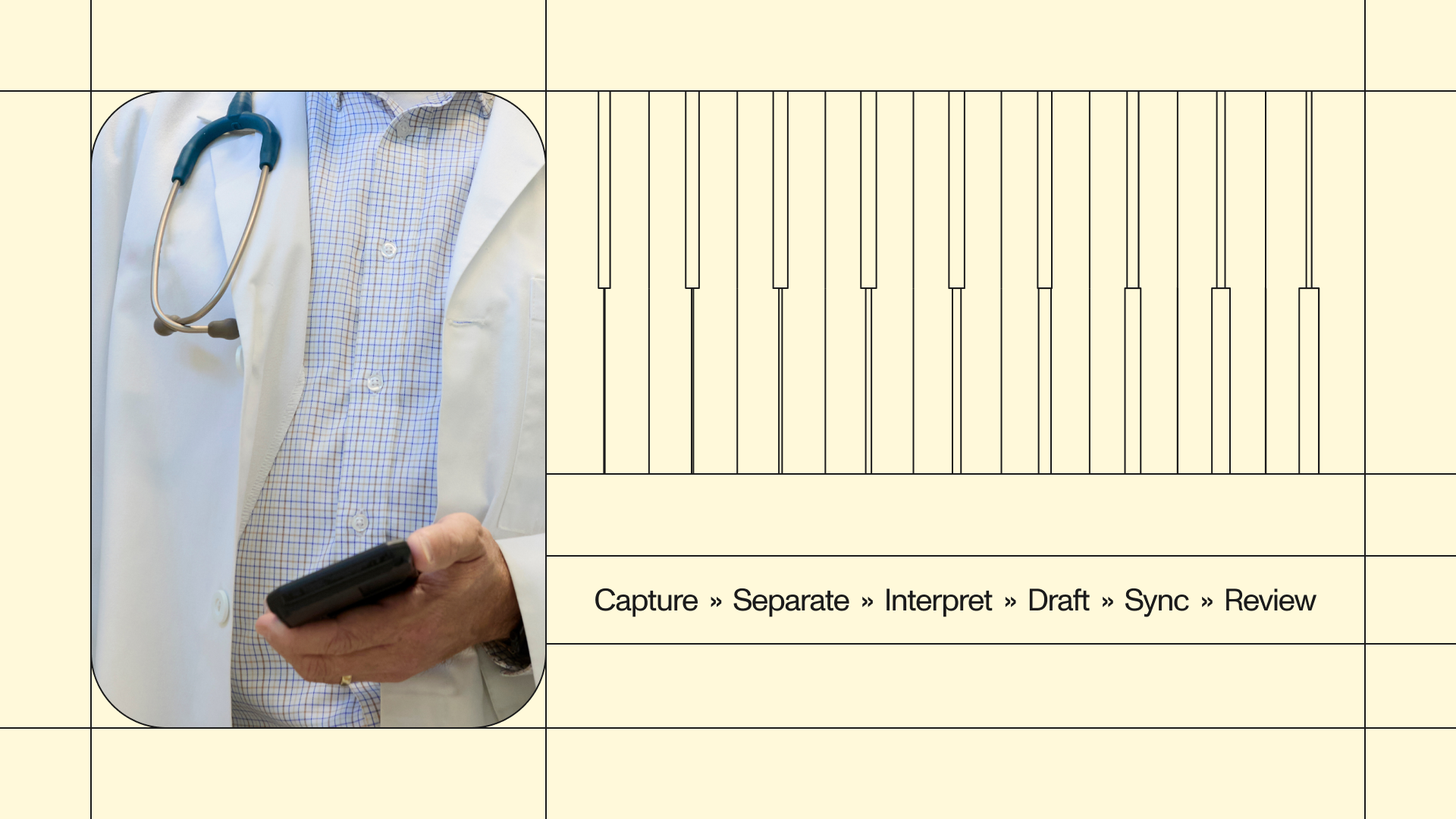
A comprehensive approach should assist with the whole workflow around your visit. Before you arrive, your history, coverage status, and open items should already be assembled. During the encounter, your physician should have current guidance and the important patient-specific context within reach, without having to dig through documentation scattered across the EMR in their computer. After the visit, the paperwork that follows a clinical decision should be drafted, checked, and routed, so your physician can spend their time on your care rather than on the clerical assembly. Each piece matters, and the pieces depend on each other, but the goal is to get everything working together to get you the care you need.
Done well, a comprehensive solution changes the care experience for both clinicians and patients. Suki OS is designed to do exactly that, by connecting intelligence across fragmented technologies and turning clinical intelligence into action.
Current guidance is more likely to be used when it appears at the point of decision. You get answers faster when portal and referral workflows are connected to your chart. When all of this happens in the background, your physician has more time and energy for you, which is the reason they went into medicine. This is the goal: better, faster, and more efficient care. Suki OS meets this need by extending beyond documentation and enabling AI agents to coordinate the administrative work before, during, and after patient encounters.
The digital health revolution was supposed to make care better, and in many ways it did. But it also turned much of clinical care into clinical coordination. Every new system, portal, and connection added another task to someone's day. That needs to be solved now, and AI is finally making it easier to connect the dots and close the gaps.
Every solution in this space should be held to a clinical standard. The question isn't how many forms it produces or how many features it has; the question is whether it handles all the busywork seamlessly, so clinicians have more time to take care of you.
Read the announcement to discover Suki OS: the next chapter of healthcare AI.