Turning clinical intelligence into action
November 16, 2026
Somewhere along the way, we got the relationship between technology and healthcare backwards. We built systems to help clinicians care for patients, but increasingly, clinicians find themselves spending more time serving those systems than the people sitting in front of them.
That contradiction led me to start Suki nearly a decade ago. I believed technology should work for clinicians, not the other way around. And I believed AI could fundamentally change that relationship, giving clinicians back something no technology should ever take away: their ability to be fully present with their patients.
We started by pioneering ambient AI, turning clinical conversations into intelligence that could reduce administrative work. It was an important first step, but we always knew documenting clinical encounters was only the beginning.
Because healthcare doesn't have a technology shortage. It has a fragmentation problem.
Over the years, we've added more systems, data, and solutions, each promising to make healthcare better. Yet too often, we've created more complexity, more administrative work, and more distance between clinicians and their patients. We've become so accustomed to this friction that we accept it as an inevitable part of delivering care.
I don't believe it has to be this way.
The greatest opportunity for AI in healthcare isn't simply making today's processes faster. It's questioning why so many of those processes exist and imagining what becomes possible when technology takes on the work that keeps clinicians from doing theirs.
That's the thinking behind Suki OS, the agentic operating system we're introducing today. Built on our Ambient Clinical Intelligence platform, trusted by more than 450 healthcare organizations and supported by independently validated outcomes from KLAS, Suki OS represents the next chapter of our vision. We're building on that foundation to connect intelligence across fragmented systems and enable AI agents to coordinate work before, during, and after patient encounters.
Our ambition isn't to put more technology into healthcare. It's to make technology work so seamlessly that clinicians can give their attention to what matters most: the person in front of them.
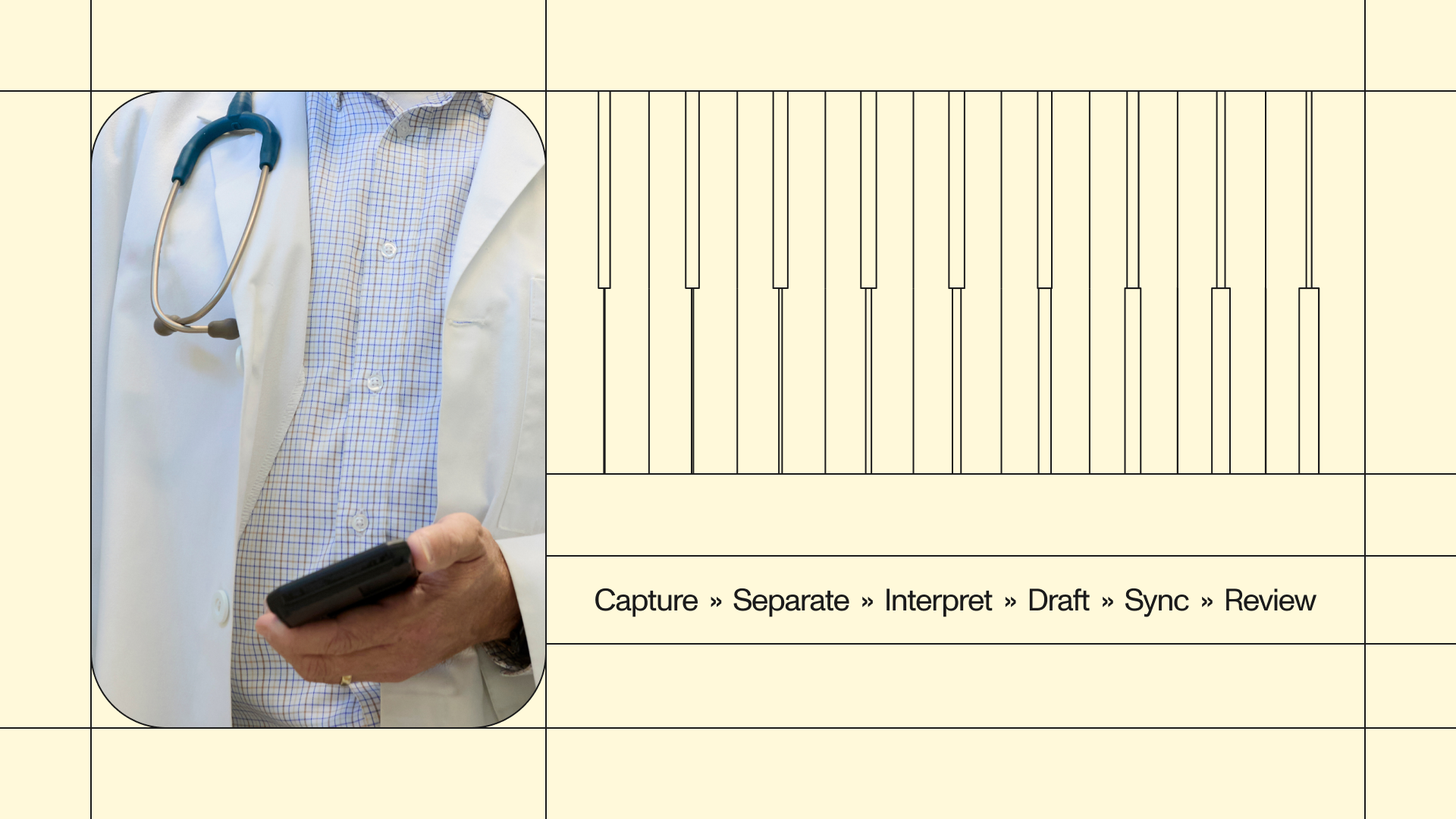
Each step built on the last. Capture. Intelligence. Reasoning. Now comes action.
With Suki OS, we're building toward a future where AI doesn't just document what happened or surface what a clinician needs to know. It helps get the work done.
Imagine a clinical encounter where, before the patient arrives, Suki prepares a patient summary while AI agents verify insurance eligibility and flag potential care concerns. During the visit, Suki prepares documentation and orders for clinician review, while agents surface medication costs and identify prior authorization requirements. After the visit, agents help close coding gaps, advance authorizations, and coordinate follow-up care.
As AI becomes more capable, the problems we tackle should become bigger, too.
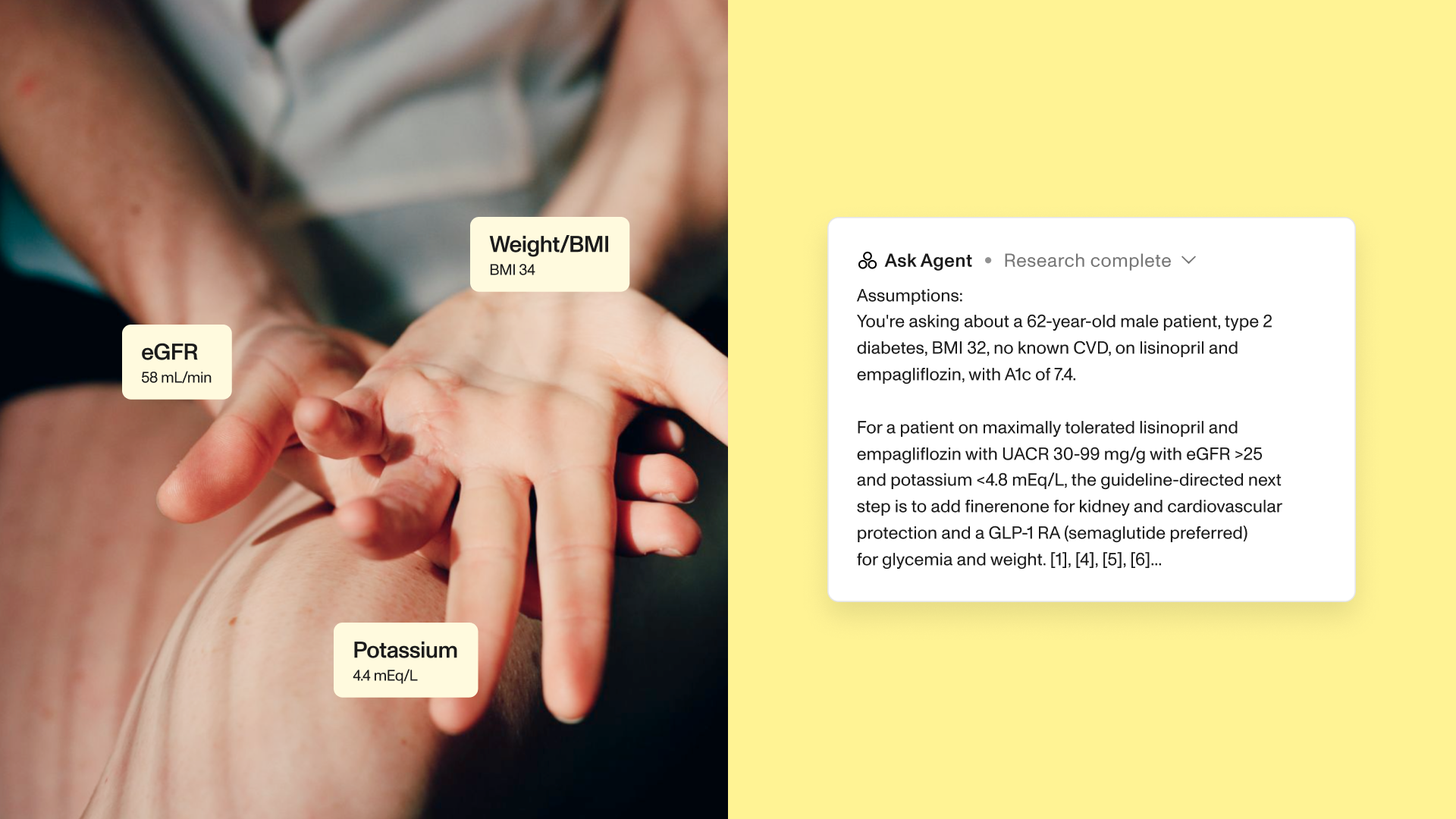
Many of these capabilities are already available today, including ambient documentation, ambient coding, and Suki Ask, which brings trusted clinical knowledge into clinicians' workflows. We're now building on that foundation with the next generation of AI agents, starting with Prior Authorization and Clinical Documentation Improvement (CDI).
This isn't about replacing clinical judgment. It's about taking on more administrative work while keeping clinicians in control of clinical decisions. Human oversight and enterprise governance are central to how we're building Suki OS.
But realizing this vision requires more than intelligent agents. It requires rethinking how healthcare technology works together.
Every new solution risks becoming another disconnected system. As AI agents become more deeply embedded in EHRs, their potential should extend beyond any single system. Healthcare organizations need AI that connects the technologies, data, and workflows they already rely on, rather than creating new boundaries around them.
We don't need more silos. We need intelligence that works across the systems healthcare organizations already use.
That's why the Suki Partner Ecosystem is central to our vision. Through Suki Insights Partners, we're bringing specialized intelligence into clinical workflows, with partners including Optum, Wolters Kluwer UpToDate, Stellar Health, and ECLAT.
Through Suki Platform Partners, we're enabling healthcare technology companies to embed Suki's AI capabilities into their own products. Today, Suki powers AI capabilities for more than 30 healthtech companies.
We're also developing an extensible integration framework built on standards such as Model Context Protocol (MCP), designed to connect third-party applications and AI agents with Suki's intelligence across systems and workflows.
Our philosophy is straightforward: healthcare organizations shouldn't have to replace the technology they've already invested in to benefit from the next generation of AI.
The future of healthcare AI will be built through an ecosystem, not a collection of isolated applications.
Of course, there's a difference between building an AI agent that works in a demonstration and one that works in a real clinical environment. Healthcare is full of exceptions, dependencies, and complexities that don't fit neatly into a product specification.
That's why we're building alongside the people who understand healthcare best. We're collaborating with organizations like the University of Miami Health System to identify clinical and operational workflows where agents can meaningfully reduce the burden on care teams. We're also working with Google on agent innovation, with plans to debut a patient research agent at Google's Cancer Symposium in December.
By bringing clinical expertise into the development process, we can build technology grounded in the realities of care, not just what's technically possible.
And as we enter this next era of AI, I believe we also need to rethink how we define success.
For too long, technology companies have measured success by what they ship rather than what changes for the people using it. In healthcare, that's not good enough. Innovation only matters if it makes a meaningful difference for clinicians, patients, and the organizations delivering care.
That's the thinking behind the Suki Guarantee. We're making a performance-based commitment to our customers because we believe technology providers should share responsibility for delivering measurable results, not simply promise them.
As AI takes on more complex work, trust won't come from what the technology is capable of doing. It will come from proving that it delivers on its promise.
Suki OS represents the next chapter of a vision that has guided us from the beginning. It's built on years of innovation, but more importantly, on everything we've learned from the clinicians and healthcare organizations who have trusted us to solve some of their hardest problems.
As AI becomes more capable, our responsibility becomes greater. The measure of our progress won't be how many agents we build or tasks we automate. It will be whether we fundamentally change the experience of delivering and receiving care.
Because the most important thing in healthcare has never been technology. It's the human connection between someone who needs care and someone who has dedicated their life to providing it.
If we get this right, the greatest thing AI will give healthcare isn't intelligence. It's presence.
That's the future we're building.