Two Years In: How the Suki Developer Platform Grew From a Single SDK Into the Backbone of Clinical AI
June 10, 2026
Two years ago, Suki opened the doors to its Developer Platform with a simple promise: healthcare's best builders should be able to bring Ambient Clinical Intelligence (ACI) into their own products without having to invent the underlying technology from scratch. The first announcement said the quiet part out loud — technology partners could use Suki's SDKs to enable ACI in their solutions.
Two years later, that promise has become something far larger than a developer tool. The Suki Developer Platform now powers a meaningful share of the clinical AI experiences happening across the United States every single day, embedded inside EHRs, telehealth platforms, and clinical workflows that clinicians already rely on. What started as an SDK is now infrastructure. This is the story of how it got there.
The Original Idea
The vision for the Suki Developer Platform was sparked during a winter 2024 onsite visit with one of the nation's leading EHR organizations. The EHR partner shared a powerful perspective: they weren't for a standalone product. They wanted a platform that would let them build alongside Suki and tailor solutions to their own workflows.
That moment crystallized a real market shift. Healthcare organizations were increasingly looking for flexible, extensible AI platforms that could be integrated deeply into existing systems and customized to the way their teams actually worked. That insight became the foundation for the Suki Developer Platform — a robust set of tools that empowers partners to embed Suki's AI capabilities directly into their products, workflows, and user experiences.
The platform launched with one strong use case: enabling our partners to seamlessly integrate ACI into their own products. It was focused, it was reliable, and it answered the question every partner was asking — can we get this magic inside our own product, fast?
The answer was yes. And then partners started asking the next question, and the one after that.
“What began as a single SDK for turning clinical conversations into notes has evolved into a modular platform built on top of Suki’s core Ambient Clinical Intelligence layer."
From One Use Case to a Full Modularized Toolbox
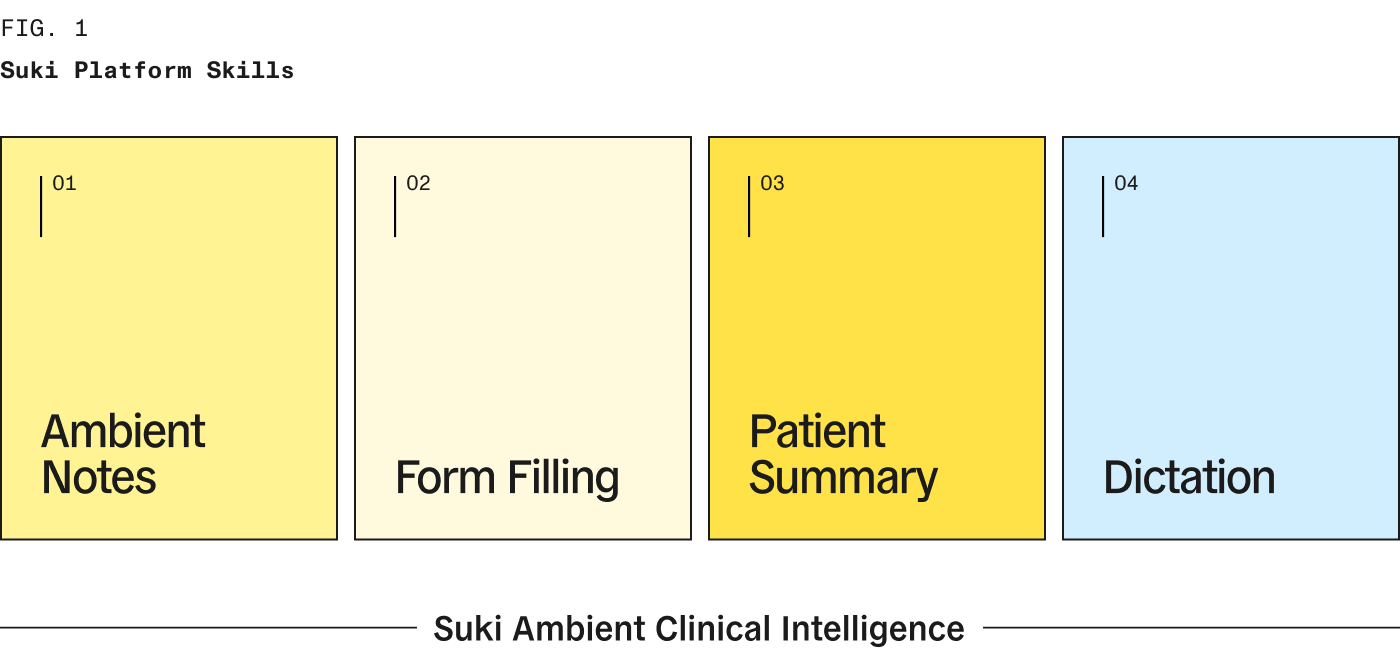
Two years on, the Suki Developer Platform looks very different from where it started. What began as a single SDK for turning clinical conversations into notes has evolved into a modular platform built on top of Suki’s core Ambient Clinical Intelligence layer. Supporting use cases across Ambient Documentation, Orders, Dictation, Summarization Form Filling, and more.
Think of it like LEGO bricks for clinical AI. At the foundation is Suki’s ACI engine, which handles the heavy lifting of understanding clinical conversations and transforming them into structured, actionable data. On top of that foundation, Suki has developed a growing set of modular capabilities that partners can pick and choose from to build solutions tailored to their own workflows and products. Partners can either take a pre-built “LEGO set” with Suki’s UI, where they can apply their branding colors, or go completely modular with our headless/API solution, and build with the platform's building blocks. Partners could also use a combination of these solutions at the same time, since Suki’s platform products are interoperable in nature.
These building blocks include Ambient Note capabilities that generate structured, specialty-aware notes from clinician-patient conversations; Form-Filling APIs and SDKs that automatically populate structured fields inside partner applications; Dictation APIs and SDKs that deliver fast, accurate medical transcription across devices; and a growing library of clinical intelligence primitives that partners can combine in new ways.
This modular approach gives partners the flexibility to start with a single capability and expand over time, or assemble multiple components into a deeply customized solution. Rather than adopting a one-size-fits-all product, organizations can use only the pieces they need and configure them to fit their specific workflows.
The result is a platform that has grown from one focused use case into one of the most comprehensive and customizable clinical AI developer surfaces in the market. The market is responding: in the last six months, ambient encounters across Suki for Clinicians and Partners grew 88%. Adoption isn't just widening — it's deepening.
From the Exam Room to Everywhere Care Happens
The journey began with clinicians in the exam room. Partnerships with leading EHRs like athenahealth scaled that original use case to general availability, putting ambient notes into the daily workflow of thousands of clinicians on one of the most widely used EHRs in the country. Many critical workflows benefit from Suki for partners - from clinicians, nurses, telehealth providers, care managers, and revenue cycle teams. The exam room was just the beginning. Every corner of the care journey had similar problems to solve.
Today, Suki’s platform powers AI experiences across:
- Telehealth: Through our partnership with Zoom, Suki generates clinical notes directly within virtual care workflows.
- Care Management: Partnerships like HealthEdge bring Ambient Clinical Intelligence to care coordination and post-acute workflows.
- EHR: Through integrations with WellSky, medent, and Azalea Health, Suki embeds ambient clinical intelligence directly inside the systems clinicians already use to document and manage patient care.
- Revenue Cycle Management: Through collaborations with leading RCM organizations, including Optum Real, Suki supports documentation and coding workflows that drive financial performance.
Each new domain deepens the platform’s clinical intelligence. Suki’s mission has never changed: to create ambient intelligence that assists clinicians, so they can focus on what matters most.
Faster Time To Market
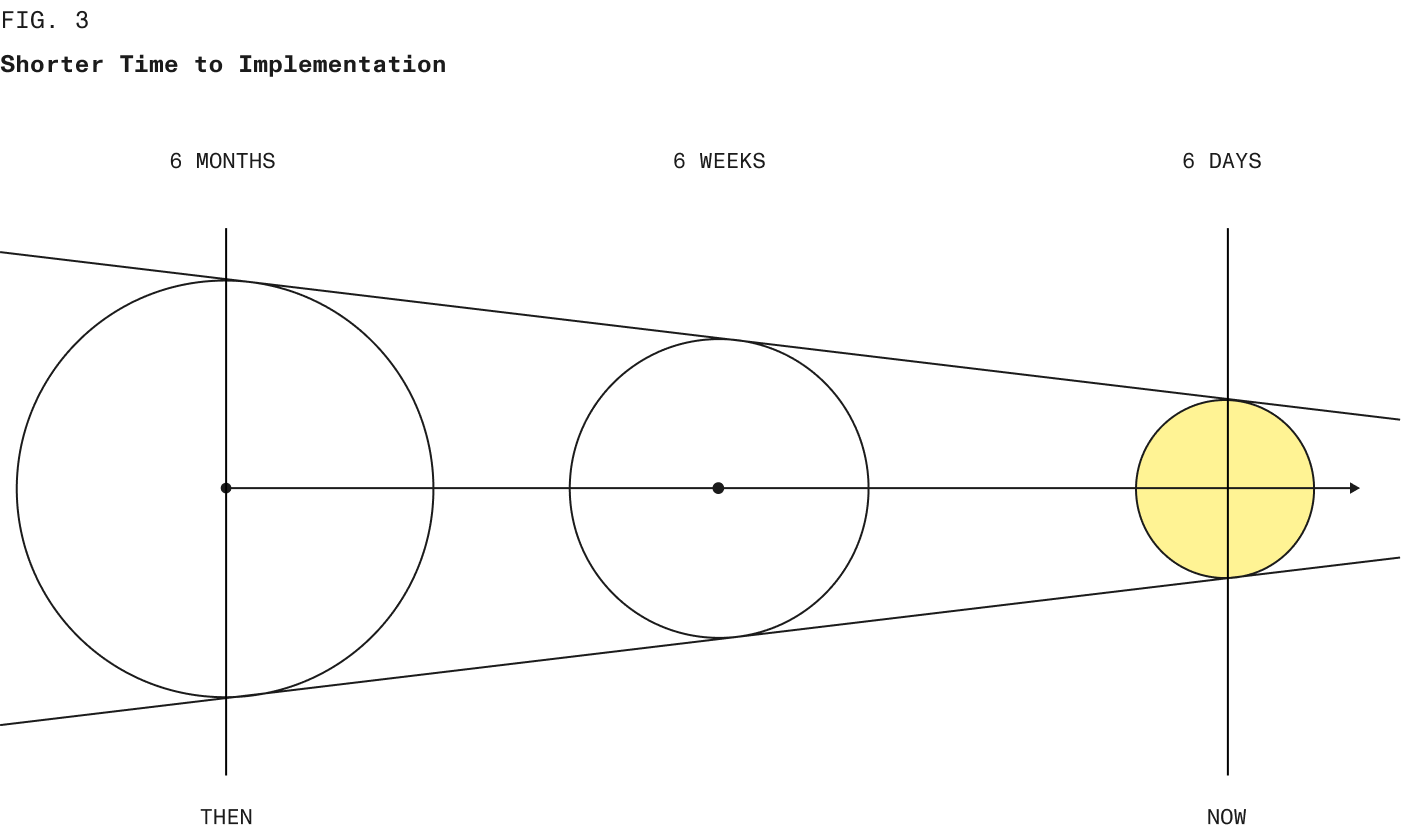
If the platform is known for one thing inside the partner community, it’s how easy it is to integrate. That wasn’t an accident. The platform team obsessed over time-to-first-call. Documentation was written to be readable, not just complete. Sample code worked the first time. Partner integrations that traditionally took six months were compressed into six weeks—and in some cases, six days.
Healthcare AI has a reputation for being slow and complicated. Suki’s platform was designed to feel like the opposite: drop in an SDK, follow the guide, and ship the feature.
That simplicity extends beyond traditional APIs and SDKs. Suki also supports MCP servers and agentic workflows, making it even faster for partners to discover capabilities, orchestrate tasks, and build intelligent applications on top of the platform. Whether a team is integrating directly through APIs, connecting through MCP, or using autonomous agents to coordinate multiple services, the goal is the same: reduce the amount of infrastructure partners need to build themselves. Now, with MCP support on the documentation, the platform can be implemented in minutes with the AI agent of choice.
Every hour a partner doesn’t spend wrestling with integration is an hour they can spend delivering solutions that reduce clinician burnout and improve patient care.
The Road Ahead
Two years ago, Suki said it wanted to AI-enable healthcare's best builders. Today, it is doing exactly that — every single day, across millions of clinical interactions, in nursing units and telehealth visits and care management calls and revenue cycle queues all over the country.
But the real story is bigger than any single product line or partnership. What Suki has been building is an Ambient Clinical Intelligence for healthcare. Cloud became the layer for compute. Identity became the layer for trust. ACI is becoming the layer for clinical understanding — the connective tissue that turns every data fume and every conversation between a clinician and a patient into structured, useful, downstream-ready intelligence: the summary, the note, the form, the order, the code, the care plan, the next best action.
Today, our Platform supports 120+ specialties, 80+ languages, ambient documentation, personalization, diagnosis, orders, summary, dictation, form filling, and many more capabilities across API, Web, and Mobile surfaces. Our surfaces are interoperable and modular in nature, which makes it possible for you to build a truly integrated experience within your product suite.
The next chapter is even bigger. Suki’s infrastructure will keep growing into new specialties, new languages, and new clinical settings. It will become more agentic, even more proactive, and more aware of the full context around a clinical encounter. It will move from capturing what happened to anticipating what should happen next. And it will continue to live wherever its partners need it most — inside the EHR, the telehealth platform, the care management and RCM workflows, and whatever new surface healthcare invents next.
The Developer Platform has grown up. What started as a single SDK to turn a conversation into a note has become the infrastructure layer powering clinical AI across some of the most respected organizations in healthcare. The promise made two years ago has been kept. And the most important clinical interactions — the ones that haven't been documented yet, in settings that haven't been built yet — are still ahead of us.
Onward.
Bahador Saket & Yash Lala
Related Resources
September 1, 2026
Science at Suki: Bringing scientific rigor to Ambient Clinical Intelligence
August 13, 2026
Ambient intelligence for engineers: Why we made Suki's platform native to AI development tools with MCP
June 8, 2026