The Doctor Will See You Now — And Actually Be Present
July 15, 2026
AI-powered ambient documentation is solving one of primary care's most stubborn problems: the chart that never ends.
There's a scene that plays out in exam rooms across America, thousands of times a day. A patient finishes describing their symptoms, and the doctor swivels toward a screen to type. The conversation doesn't stop, but the connection does. And when the appointment ends, the real work begins.
For many family physicians, clinical documentation doesn't close with the last patient of the day. It follows them home.
Dr. Michael Sojka knows this rhythm well. He has used medent since 2021 across multiple primary care practice settings. As a family medicine physician at Jordan Elbridge Medical Center in upstate New York, he spent years finishing notes after hours, or even sometimes days later. That means piecing together encounters from frantic in-visit typing, incomplete dictations, and the details from memory. The backlog wasn't just a productivity problem. It was a quality-of-care problem, and a quality-of-life one.
Then, in December 2025, he started using Ambient Listening, powered by Suki, embedded directly into his medent EHR. Within weeks, the after-hours charts were gone. Medent conducted a case study to understand the results Dr. Sojka was able to achieve by streamlining his workflow with Ambient Listening powered by Suki. It’s a story, and a partnership, that Suki is proud to be a part of.
The "pajama time" problem finally has a fix
Studies have consistently found that clinicians spend nearly two hours on EHR work for every hour of face-to-face patient care. And completing charts at home after hours, also known as pajama time, is a common contributing factor to clinician burnout.
What makes Ambient Listening different from earlier potential solutions (like voice-to-text, templated shortcuts, offshore medical scribes) is that it doesn't ask clinicians to change how they practice. Dr. Sojka's workflow is instructive: he sets his laptop on the desk behind him, hits record, and talks to his patient. The AI captures the clinical dialogue in real time, generates a structured note with ICD-10 codes, and queues it for a quick review and sign-off.
No backlog. No reconstruction. No laptop in the car.
It's nice to go home and have work be done. A year ago, I would never leave my computer at the office. Now, I don't need it at home.
Dr. Michael Sojka
The numbers behind that shift are striking. Dr. Sojka is saving 2–3 hours per day on documentation. His patient volume has increased by up to 30% — from roughly 15–18 patients per day to 18–23 — without extending his clinical hours. Same-day note completion has reached 90–95%, and same-day clinical follow-through (referrals, imaging, follow-up planning) is running at approximately 90%.
Better notes. More patients. Less friction.
The skeptic's question is always: does faster mean worse? In clinical documentation, the answer has traditionally been yes. Speed-typed notes miss details. Delayed dictations lose nuance. Ambient capture, done well, reverses that tradeoff.
Because the system captures the full encounter dialogue, not just a clinician's summary, the clinical detail is actually richer, not thinner. Dr. Sojka noted that if you mention your exam findings out loud, they go straight into the note. The pertinent information is simply there.
The tool also adapts to individual documentation preferences. Dr. Sojka configures his notes with concise verbosity, narrative history, and a problem-based bulleted HPI. The output reflects his clinical voice, not a generic template. That's a meaningful distinction: a note that sounds like the physician who wrote it is more useful to everyone downstream, like specialists, insurers, and future providers.
The workflow case is just as strong as the quality case
One of the less-discussed consequences of documentation delays is their downstream effect on care coordination. When a note isn't signed until Tuesday evening for a Monday appointment, the referral doesn't go out. The imaging order sits. The patient waits.
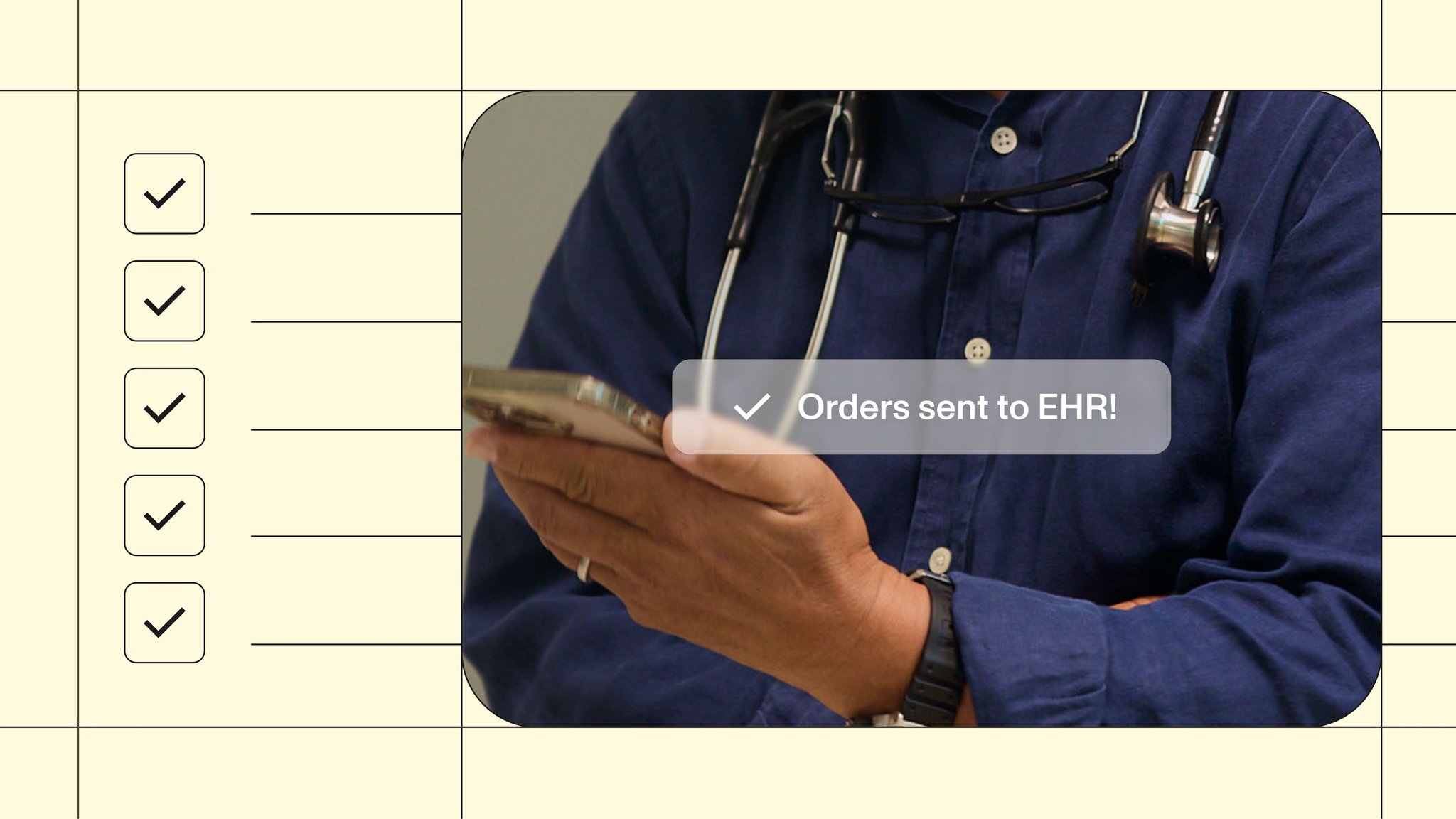
Ambient Listening closes that gap. With same-day note completion now the norm, Dr. Sojka signs his morning notes at lunch and routes referrals and imaging the same day. The administrative tail that used to drag behind every patient encounter has been cut nearly to nothing.
For practice managers, this is the part of the story worth underlining. Besides the obvious physician wellness benefit, faster documentation is an operational lever for the health system. Higher throughput, same-day billing capture, reduced denials from incomplete documentation, and faster downstream coordination are all downstream effects of solving the charting problem at its source.
What this looks like at scale
Dr. Sojka's experience is a single data point. But it's a well-documented one, and it maps onto a consistent pattern emerging across primary care practices that have adopted ambient AI documentation.
The technology is no longer experimental. With over 870 sessions completed since December, averaging more than 20 per day, the integration into Dr. Sojka's daily practice is complete and habitual. The learning curve, he noted, was minimal. medent helped configure templates at the outset, and the system's interface, record, stop, review, done, is intuitive enough that there was nothing to unlearn.
For family medicine practices managing high daily volumes under persistent staffing and reimbursement pressures, that ease of adoption matters as much as the outcomes.

The bottom line
Ambient listening won't solve every problem in primary care. But documentation burden is one of the field's most pervasive and well-documented stressors, and this is a solution that demonstrably works, in a real practice, at real scale, with a physician who was skeptical and is now a convert.
The story of Dr. Sojka isn't a technology story. It's a story about a doctor who can be present with his patients again, and who gets his evenings back.
That's worth paying attention to.